As you might have noticed this blog's activities have due to several reasons slowly declined. While Sergio's professional interests and dues have moved in new directions I completed my PhD last year and thus also my research on Post-Soviet popular music as a professional activity (at least until the next funding opportunity).
The reason we waited until now to officially close the blog was so that we could publish the review of "Good-Bye Leningrad". That done we feel it is time to say good bye for now. This does not mean that our interest for the music has disappeared - we might very well be back very soon (and I might have some posts on Post-Soviet popular music in my personal blog). Of course, if you have any proposals or idea, don't hesitate to contact us!
Until then, thank you for dropping by and до связи!
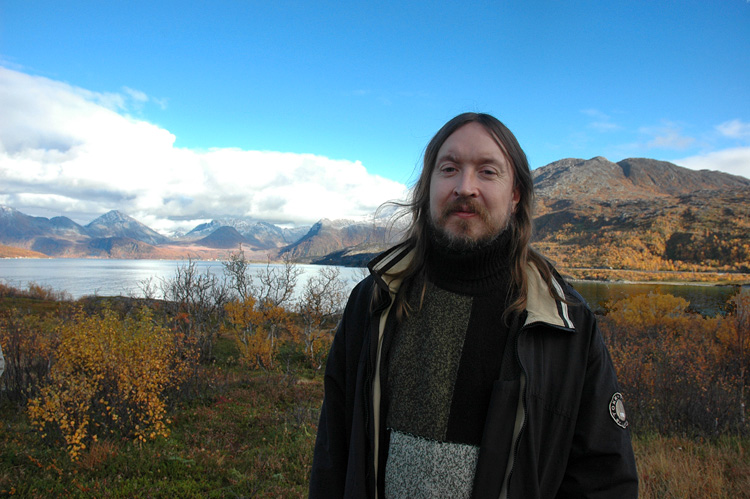
After the special issue of Popular Music and Society on post-soviet popular music was published I was contacted by the movie director and photographer Christine Bachmann who asked if I had heard of the movie "Good Bye, Leningrad" - which I had not. After some technical complications I finally got a review copy of the bilingual movie (Russian, German) released in 2005.
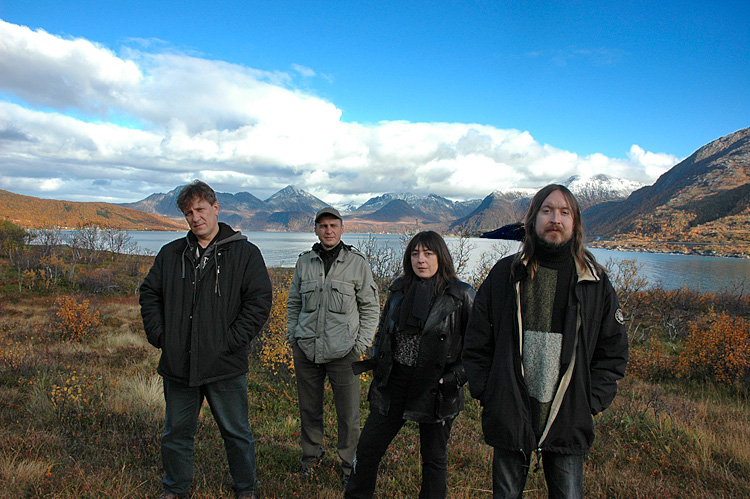
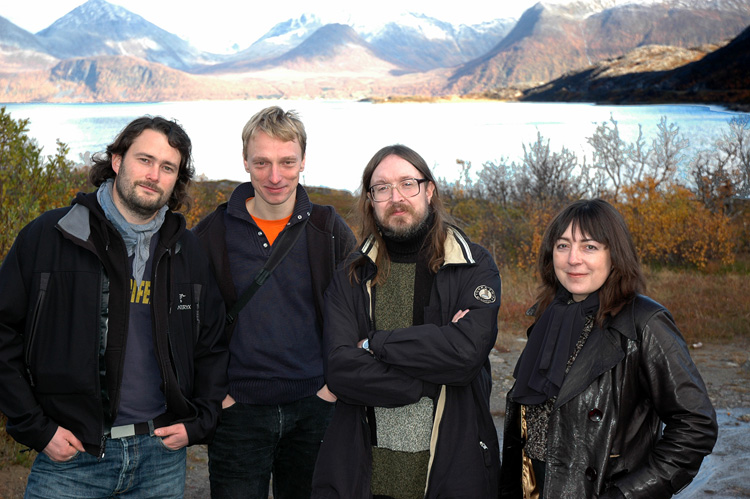
Directed by Bachmann "Good Bye, Leningrad" follows 5 musicians from the St. Petersburg based band Pudra. Interplecting images from their daily routines the musicians describe their ties to St. Petersburg and how Pudra was founded. While thus essentially a band portrait the movie at the same time offers a good glimpse into the life of an upcoming St. Petersburg based rock band: most of the musicians moved to the city, they are not full time musicians but have day jobs and they rehearse in the basement of a residential building. Ideologically St. Petersburg is seen as the Russian rock city, but the musicians are as pessimistic regarding the state of Russian rock music as they are optimistic about why their music is special - something common for many underground bands I talked to during my fieldwork in St. Petersburg. In my fieldwork this disregard for Russian rock was most poignantly reflected in Leningrad/Spitfire's Roman Parygin's answer to my question what russkii rok is: "Polnoe gavno!" (Complete shit! - interview with author, 23.06.2006)
Leningrad also brings us to the movie's title "Good Bye, Leningrad" and what makes Pudra a little different from most other similar St. Petersburg bands: they warmed up for Leningrad in Palast der Republic in Berlin on November 9th, 2004 (while Leningrad's vocalist Sergei "Shnur" Shnurov sees himself as the grave digger of russkii rok I will leave any interpretation of the movie's title to the readers ;-)). The movie does not indicate how/why the band played in Germany, but Pudra has a connection to Germany through the bass player, who studied in St. Petersburg as an exchange student and who joined the band while living there. Playing abroad is a logistic and bureaucratic nightmare since not only are contacts in Germany needed but the band members need foreign passports (zagranpasport / zagranichnyi pasport), visas and some kind of upfront financing. Seeing Pudra warm up for the cult band Leningrad which has gathered a considerable fan base in Germany is thus quite impressive.
The concert in Germany, however, only bookend the movie – the main theme is the band in St. Petersburg. This is also what makes the movie in my eyes special since it offers a nice description of the musicians' life and motivations. In other words, the movie is definitively recommendable for anybody interested in Post-Soviet popular music!
A happy summer announcement: The journal "Popular Music and Society" (32:3 2009) titled "Popular Music in the Post-Soviet Space: Trends, Movements, and Social Contexts" of which Yngvar Steinholt and I, David-Emil Wickström, were guest editors is now out. Concluding about two years of editorial work (and a lot of really interesting submissions) the journal includes the following articles ranging from Russian pop and rock over Uzbek Estrada and Kazakh music videos to Georgian world music:
Yngvar B. Steinholt; David-Emil Wickström: "Introduction"
David-Emil Wickström; Yngvar B. Steinholt: "Visions of the (Holy) Motherland in Contemporary Russian Popular Music: Nostalgia, Patriotism, Religion and Russkii Rok"
Polly McMichael: "Prehistories and Afterlives: The Packaging and Re-packaging of Soviet Rock"
Stephen Amico: "Visible Difference, Audible Difference: Female Singers and Gay Male Fans in Russian Popular Music"
Tanya Merchant: "Popping Tradition: Performing Maqom and Uzbek “National” Estrada in the 21st Century"
Megan Rancier: "Resurrecting the Nomads: Historical Nostalgia and Modern Nationalism in Contemporary Kazakh Popular Music Videos"
Lauren Ninoshvili: "The Poetics of Pop Polyphony: Translating Georgian Song for the World"
A pdf-version of Yngvar B. Steinholt's dissertation "Rock in the Reservation" (currently out of print) can now be downloaded from Yngvar's homepage: www.hum.uit.no/a/steinholt/p3.html.
A short mention that my article on Haydamaky, Ruslana and Svoboda was just published in ICTM's Yearbook for Traditional Music. This article focuses on how the Ukrainian groups Ruslana and Haydamaky fashion themselves based on their country of origin and what role history and traditional musics play in that process. Using a post-colonial perspective I argue that the identity constructed functions to assert Ukrainian sovereignty and thus distinguish the Ukraine from its former colonizer Russia while at the same time Ruslana draws on similar methods of representation when appropriating the Other (the Ukraine in Russia's case and the Hutsuls in Ruslana's case).
The complete reference to the article is:
Wickström, David-Emil: "'Drive-ethno-Dance' and 'Hutzul Punk': Ukrainian-associated Popular music and (geo)Politics in a Post-soviet context"", Yearbook for Traditional Music 40 (2008), p. 60-88
November 8th, 2008: For the first time in its over 30 year existence the rock band Akvarium will perform in Italy: the only concert will be in Milan at the Teatro degli Arcimboldi. Actually, it is more accurate to say Boris Grebenshchikov is performing, since there is not much else left of the original Akvarium besides its incontestable leader. The other musicians are from the Post-Soviet period: Boris Rubekin, the group's keyboard player (since 1998) and one of the three violinists, Andre Surotdinov (since 1995).
BG's band will perform with a non rock group, without guitars and a drum set, but with a lot of orchestral instruments (such as violin, flute and cello) and folkloric (such as Indian tabla and sitar and Irish uilleann pipes and bodhrán).
The concert looks very interesting and original - unfortunately, I cannot make it...
БГ в Милане
8 ноября 2008г.. Впервые в его более чем тридцатилетнем существовании группа Аквариум выступает в Италии: единственный концерт в Милане в Театро дельи Арчимбольди. Точнее, было бы точнее говорить только о Борисе Гребенщикове, поскольку от Аквариума, кроме его неоспоримого лидера всех времен, осталось очень мало: Борис Рубекин, клавишник группы с 1998 года, и один из трех скрипачей, Андрей Суротдинов (с 1995 года).
Группа БГ будет выступать в нероковом составе, без гитар и ударных, но со многими оркестровыми инструментами, вроде скрипок, флейты и виолончели, и фольклорными, как индийские табла и ситар, ирландские волынки "uilleann pipes" и бодхран.
Концерт обещается очень интересным и своеобразным. Жалко, что мне не получится туда попасть...
Just a short mention that my article "Marusia visits Berlin. Cultural flows surrounding the Russendisko" was published in the Danish academic journal "Musik & Forskning" (the article is in English). There I discuss the Russendisko in Berlin focusing on the music played and the target group.
We briefly mentioned the Russendisko in an earlier post (Post Soviet popular music outside the post Soviet space) as an event outside the former Soviet Union where Post-Soviet popular music is played. The fortnightly event is located at the Berlin club "Kafe Burger" and is run by the DJs Wladimir Kaminer (emigrated from Russia) and Yuriy Gurzhy (emigrated from the Ukraine). Besides dj-ing Kaminer and Gurzhy also produce compilations of the music they play.
Their latest compilation was just released with the name "Ukraine do Amerika". As the title indicates, the focus is on groups with ties to the Ukraine. This includes Ukrainian groups like Mandry, Perkalaba, Mad Heads XL and VV (with a cool Ukrainian cover of AC/DC's "Highway to Hell") as well as groups from outside the Ukraine - but with ties to the country like the Berlin based Rot Front (which is Yuriy Gurzhy's group) and the St. Petersburg based Svoboda - the group I played in while doing fieldwork (this is actually the first officially released recording of the group).
Musically the groups reflect the style at the Russendisko - the use of a horn section, a ska-punk influenced idiom and influences from traditional music (melodic, harmonic and instruments). The primary language - and here the CD to some extent differs from the previous ones - is Ukrainian, not Russian.
All in all an interesting CD - especially if you do not know these groups from before and need an introduction to Ukrainian popular music.
Новый сборник: Ukraine do Amerika
(Русская версия - адаптирована Sergio Mazzanti)
Мы кратко упомянули Russendisko в предыдущем посте (Постсоветская популярная музыка вне пределов постсоветского пространства) как событие вне пределов бывшего советского Союза, где играют постсоветскую музыку. Ежедвухнедельное событие происходит в берлинском клубе "Kafe Burger" и его проводят ди-джеи Владимир Каминер (переехавший из России) и Юрий Гуржий (переехавший из Украины). Те же Каминер и Гуржий выпускают сборники музыки которую играют.
Только что выпустили их последний сборник под названием "Ukraine do Amerika". Как показывает заглавие, упор делается на группы связаны с Украиной. Это вклячает такие Украинские группы, как Мандри, Перкалаба, Mad Heads XL и ВВ (с крутой украинской обложкой из "Дороги в ад" AC/DC), как и группы вне пределов Украины, но связаны со страной, такие как основанная в Берлине Rot Front (которая является группой Юрия Гуржего) и основанная в Санкт-Петербурге Svoбода - группа в которой я играл во время своих полевых исследовании (это до сих пор первая официально выпущенная запись группы).
Музыкально группы отражают стиль Russendisko - использование духовой секции, около ска-панковский стиль и влияния традиционной музыки (мелодика, гармоника и инструменты). Основной язык (и в этом компакт-диск до некоторой степени отличается от предыдущих) - украинский, не русский.
В общем интересный компакт-диск - особенно если ты не знаешь уже этих групп и тебе нужно вступление в украинскую популярную музыку.
Founded 2005 Ost Klub has developed to one of the central venues of Eastern European music in Vienna. Nomen est omen also in this case, as the club's owner Matthias Angerer explained during an interview with me last July:
“[D]er Name des Lokals ist so zusagen auch Programm, also osteuropäische Musik oder eben Russische oder Musik aus dem Balkan, aber auch weiter. Also die musikalische Achse für uns ist sozusagen Wien - Vladivostok, also. Und alles was dazwischen liegt und das ist ja doch´ne ganze Menge [...] Ich freu mich schon auch ein mal auf eine Usbekische Band oder eine Band aus Azarbadjan, also der Osten ist weit und insofern wird's musikalisch, glaub ich, auch nicht fad so schnell.”
Matthias Angerer, Wien 13.07.2007
("The club's name is so to say also its program, in other words Eastern European music or Russian or music from the Balkans, but also further away. Also the musical axis for us is so to say Vienna-Vladivostok, also. And everything between and that is actually quite a lot [...] I also look forward to hearing a Uzbek band or a band from Azarbadian, well the East is vast and thus I doubt that it soon will become boring musically.")
This is reflected in the program covering musicians and groups from the Balkan (they are one of the venus for Balkan Fever 2008), former Eastern Europe and the former Soviet Union.
The club is situated close to the Rennweg (the address is Schwarzenbergplatz 10) and Angerer placed it and its location within a historical context pointing out that Metternich proclaimed "Der Balkan beginnt am Rennweg!" ("The Balkan starts at the Rennweg!"). Thus the club and it's music policy focuses on the cultural legacy of imperial Vienna.
The Club itself - occupying a basement - is enormous, encompassing two stages, a dance floor, a lounge and bar areas (prior to Ost Klub three clubs occupied the premises). In addition the club has a spacious backstage area with catering possibilities for the performing groups. Angerer stressed that he wanted to return the hospitality he experienced in Eastern Europe and from my own observations the club is really generous to performing musicians (I spent time backstage talking to musicians from Apparatschik and Bolshevikings).
My interest in the club has been based on bands linked to the former Soviet Union performing for a (mainly) non-Russian speaking audience. During my visit in Vienna last July I heard Apparatschik perform. The Berlin based group plays modernized versions of (primarily) Russian folkssongs and also own songs using Balalaika, Bass balalaika, Baian and Drums - in Russian. While both the vocalist and drummer are from Germany, the Bass balalaika player is from the Ukrainie and the Baian player from Beloruss.
Pictures from Apparatschik (taken by the author)
The concert last friday (April 18th, 2008) was advertised as Skanking Night and featured besides the headliner Bolshevikings The Skaddicts (Austria) and Jokerface (Süd Tirol / Italy). The Bolshevikings were interesting, since while they are based in Stockholm, the band's line up at the gig consisted of three Swedes, two Ukrainians and a Russian. The vocalist and main motor behind the band is from the Ukraine, but has been in Sweden since the end of the 1980s. Unlike Apparatschik the Bolshevikings sing in Russian, Swedish (with an Russian/Ukrainian accent), English and a little French. A very interesting concert, especially since while taking to the band it again dawned to me how important (and effective) transnational diasporic networks are when organizing tours.
Pictures from The Skaddicts and Bolshevikings (taken by the author)
Igor "Egor" Fëdorovich Letov 10. September 1964 -- 19. February 2008
On the morning of the February 19th, after nearly 25 years of intense and ever-controversial songwriting and performances, Egor Letov died at sleep in his Omsk apartment from a heart failure, aged 43.
Grazhdanskaia Oborona, Letov's main and most long-standing band, were just starting to plan their 25th anniversary tour. Letov started his musical career by co-founding the punk-band Posev in 1982. It soon turned into GO (or GrOb, as it is often abbreviated), and during the 1980s and 1990s Letov and the band built their names by releasing a steady flow of stunning tape-albums. GO had at certain points in the 80s a "totalitarian" line-up, consisting of only Letov himself playing all instruments. Over the years, however, a great number of talented musicians contributed to the band's characteristic sound and spectacular stage performances.
Letov's lyrics are provocative and rough and complimentary to a cruel and absurd world. At times the songs rage with crude punk anarchy, at other times they balance finely between cynicism, melancholy and tristesse, but always with a peculiar empowering energy. No other voice in punk can make the human spine contract and shudder the way Letov's does, neither has any other succeeded in creating such a strictly musically Russian form of punk (or rock for that matter), though it might do it more justice to call it Siberian.
While Letov's other projects (Egor i Opizdenevshie, Kommunizm) were either integrated into GO or left behind, he continued to work with, and develop GO in new directions. In September 2007 the band visited Tromsø and gave a most memorable concert - perhaps the most enduring and energetic in the musical history of our tiny university town. They also had time for a long excursion to the rocky Northern Norwegian coast, and to catch a concert with the band Adjagas. After GO's gig on the next day, Lawra Somby, Adjagas' lead singer came backstage and did the wolf-joik for Egor and Natalia. Loose plans of a joint concert were being considered.
Not even 20 gigs and five months later it has all come to an end. The Godfather and true Master of Russian punk and Siberian psychedelic folk has left the building.
Russia has become a duller place.
20. February 2008 Y. Steinholt
Yngvar Steinholt is an Associate Professor of Russian Culture and Literature at the University of Tromsø and an expert on Soviet and Post-Soviet popular music. The images are from GO's visit to Tromsø 2007 - see gr-oborona.ru/pub/photo/1199027570.html
With both Bashlachev and Kormil’tsev's death anniversaries just gone, another highly influential - while also problematic - musician linked to Soviet popular music just passed away: the poet and vocalist of Grazhdanskaia Oborona, Egor Letov died in his sleep due to a heart failure on February 19th, 2008.
Born September 10th, 1964 in Omsk Letov founded his first group "Posev" in 1982. After the group disbanded in 1984 he started Grazhdanskaia Oborona in November of the same year. GO, as the band often is abbreviated, became one of the most influential and productive Soviet Punk groups (they released almost 20 "official" albums just between 1987 and 1989) and reached nationwide popularity during the end of the 1980s and early 1990s. Besides GO Letov created other important projects like "Kommunizm" and "Egor i opizdenevshie". He was, together with Limonov, Dugin and Kurekhin (Pop-mekhanika), also one of the founding fathers of the ultranationalist National Bolshevik Party.
Besides releasing several seminal albums Letov is also featured in two books: "Ia ne veriu v anarkhiiu" ("I don't believe in Anarchy") published 1997 is an autobiographical collection of interviews and other materials while "Russkoe Pole Eksperimentov" ("The Russian Field of Experiments" - also the name of one of GO's 1989 album) published 1994 is a collection of his (and others) poems.
Моя оборона
Пластмассовый мир победил. Макет оказался сильней Последний кораблик остыл. Последний фонарик устал. А в горле сопят комья воспоминаний....
О-О.... Моя оборона... Траурный мячик стеклянного глаза О-О....Моя оборона... Солнечный зайчик дешевого мира Солнечный зайчик незрячего мира...
О-О.... Моя оборона... Траурный мячик незрячего мира О-О....Моя оборона... Солнечный зайчик стеклянного глаза Солнечный зайчик дешевого мира...
Пластмассовый мир победил. Кирпич оказался сильней. Последний кораблик остыл. Последний фонарик устал. А в горле сопят комья воспоминаний...
О-О.... Моя оборона... Траурный мячик незрячего мира О-О....Моя оборона... Солнечный зайчик стеклянного глаза Солнечный зайчик дешевого мира... О-о.. Моя оборона....
Егор Летов (1964-2008)
(русская версия - адаптирована Sergio Mazzanti)
С годовщинами смертей Башлачева и Кормильцева только что прошедшими, очередной весьма влиятельный – хотя и проблематичный – музыкант, связан с советской популярной музыкой, только что скончался: поэт и вокалист Гражданской Обороны, Егор Летов умер во сне от остановки сердца, 19-го февраля 2008 года.
Родившийся 10-го Сентября 1964 года в Омске, Летов основал свою первую группу «Посев» в 1982. После роспуска группы, он создал Гражданскую Оборону в ноябре того же года. ГО, как часто называют группу, стала одной из самых влиятельных и творческих советских панк-групп (они выпустили почти 20 альбомов только с 1987 по 1989 г.) и достигла национальной популярности в конце 80-ых и начало 90-ых годов. Кроме ГО, Летов создал другие важные музыкальные проекты как «Коммунизм» и «Егор и опизденевшие». Вместе с Лимоновым, Дугиным и Курехиным (Поп-Механика), он был также один из отцов-основателей ультранационалистского Национал-Большевистского Союза.
Наряду с выпуском многих плодотворных альбомов, Летов представлен и в двух книгах: «Я не верю в анархию (М. 1997), автобиографическая коллекция интервью и других материалов, тогда как «Русское поле экспериментов» (М. 1994; из названия одного из альбомов ГО 1989-го года) собирает его (и чужие) стихотворения.
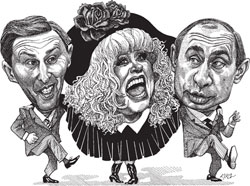
While doing research for an article I am working on I stumbled across a rating of who belongs to the Russian Elite in 2007 published in the Russian daily Kommersant. While these rankings tend to be tedious, this one was quite interesting: While Putin topped first place both in 2006 and 2007, he was not followed by Ivanov (3rd place) nor by Medvedev (5th place). No, 2nd place has since (at least) 2006 been occupied by the queen of estrada, Alla Pugacheva. On second thought this is not such a surprise if one considers the fact that she has been active within both Soviet and Russian show business and that she still dominates Russian popular music. While a majority of the people mentioned are politicians, there are quite a few people from the sphere of culture: Iosif Kobzon (8th place), Filipp Kirkorov, Pugacheva's former partner (18-19th place), Maksim Galkin, Pugacheva's current partner (30th place) followed by Nikolai Baskov and Lev Leshchenko (sharing place 31-32). Oleg Gazmanov, discussed in a previous post, is represented on place 70-71 (down from 41-42 in 2006). Since Yuri Shevchuk, who appeared in the ranking last year, did not make it this year the person closest to the russkii rok idiom is Andrei Makarevich (72-78th place )...
Во время работы над статьей я столкнулся с рейтингом о том, кто принадлежит Русской элите в 2007 году, изданном в русской газете Коммерсант. Тогда как эти классификации обычно бывают скучными, эта была довольно интересной: тогда как Путин занял первое место и в 2006 и в 2007 году, за ним не следовали ни Иванов (3-е место) ни Медведев (5-е). Нет, второе место занимала с 2006 года (по крайней мере) королева эстрады, Алла Пугачева. По зрелом размышлении это не так удивительно, если считаться с тем, что она была активная и в советском и в русском шоу-бизнесе и что она еще господствует над русской популярной музыкой. Тогда как большинство упомянутых людей являются политиками, людей из сферы культуры тоже не мало: Иосиф Кобзон (8-е место), Филипп Киркоров, бывший партнер Пугачевой (18-19-е), Максим Галкин, сегодняшний партнер Пугачевой (30-е), за которым следуют Николай Басков и Лев Лещенко (поделившие места 31-32). Олег Газманов, о котором шла речь в предыдущем посте, находится в месте 70-71 (опустившись с 41-42 в 2006 г.). Поскольку Юрий Шевчук, появившийся в классификации в прошлом году, в этом году не представлен, самым близким к русскому року человеком является Андрей Макаревич (72-78-е место).
Оценка основана на опросе 1600 русских из 46 регионах страны, проведенном ВЦИОМом 24-е и 25-е ноября 2007 года.
On February, 18th, in Krasnoiarsk there will be a charitable concert dedicated to the memory of Il’ia Kormil’tsev. Due to my many jobs and various duties it was difficult for me to honor the memory of this protagonist of Soviet and Russian rock at the proper time, who died on February 4th last year. The most famous Russian rock-poet, composer of several songs of such groups, like Urfin Dzhius, Nastia and Nautilus Pompilius, translator, literary critic and musicologist, beloved by the whole Soviet and Russian rock-community, Kormil’tsev in the last years provoked stormy discussions due to his political and ideological views; this is particularly evident in his blog at http://karmakom.livejournal.com, where he wrote until the last day of his life.
For this blog, Kormil’tsev is also important because he, together with Ol'ga Surova, is the author of one of the best articles on rock in Russia: “Rok poeziia v russkoi kul’ture: vozniknovenie, bytovanie, evoliutsiia”, “Rock poetry in Russian culture: rise, life, evolution” (“Russkaia rok-poeziia: tekst i kontekst”, Tver’ 1998, pp. 4-32). In this article the rock song is considered a particular genre (see p. 4); the authors pay attention not only to the lyrics of rock songs, as it is often the case in the journal where the article is published (see David-Emil’s post about the last issue http://ps-popular-music.blogspot.com/2007/09/russkaia-rok-poeziia-9.html), but also to music and society. “The aim of the article – the two researchers write – is to try to determine the peculiarity of the rise and life of this genre in our culture and to propose a certain scheme of its evolution” (ib.).
Regardless of his socio-political views, which one does not have to share, Kormil’tsev left an indelible mark on the history of Soviet and Russian rock music, where he occupies one of the most important places.
18 февраля в Красноярске пройдет благотворительный концерт памяти Ильи Кормильцева. Мои многие работы и разнообразные хлопоты меня затрудняли вовремя отдать дань уважения этому герою советского и русского рока, умершему 4-го февраля прошлого года. Самый известный русский рок-поэт, сочинитель многих песней таких групп, как Урфин Джюс, Настя и Наутилус Помпилиус, переводчик, музыкальный и литературный критик, любимый всей советской и постсоветской рок-общиной, Кормильцев вызывал в последние годы бурные дискуссии из-за своих политических и идеологических взглядов; об этом свидетельствует, между пр., его ЖЖ http://karmakom.livejournal.com/, в котором он писал до последнего дня жизни.
Для этого блога, Кормильцев важен еще тем, что ему принадлежит, в соавторстве с О. Суровой, одна из лучших статей о роке в России: «Рок поэзия в русской культуре: возникновение, бытование, эволюция» (// «Русская рок-поэзия: текст и контекст» Тверь 1998, сс. 4-32). В этом исследовании рок-песня рассмотрена как особый жанр (см. с. 4); авторы уделяют внимание не только текстам рок-песней, как часто бывает в сборнике, где статья помещена (см. пост Давид-Емиля о последнем выпуске http://ps-popular-music.blogspot.com/2007/09/russkaia-rok-poeziia-9.html), но и музыке и обществу. «Задача статьи – пишут два исследователя – попытаться определить особенности возникновения и бытования этого жанра в отечественной культуре и предложить некую схему его эволюции» (там же).
Невзирая на его общественно-политические взгляды, с которыми можно и не соглашаться, Кормильцев оставил неизгладимый след в истории советской и русской рок-музыки, в которой ему принадлежит одно из самых важных мест.
In this blog, David-Emil and I have often mentioned Yngvar Steinholt’s dissertation "Rock in the Reservation: Songs from Leningrad Rock Club 1981-1986". My review of this important contribution to the study of Soviet popular music was recently published in the Italian online journal eSamizdat, 2007 (V) 3, pp. 384-6. Steinholt’s book is one of few academic studies of Soviet popular music - and probably the best one: while the author only covers the period from 1981 to 1986, focusing his attention on Leningrad rock environment, he lays the foundation for a serious approach to the whole Soviet and post Soviet rock movement. In my review I briefly present the content of the book, point out its innovative aspects and consider what deserves further research.
В этом блоге мы с Дэвид-Эмилем не раз упоминали книгу Ингвара Штеиголта Rock in the Reservation: Songs from Leningrad Rock Club 1981-1986 («Рок в резервации: Песни из Ленинградского Рок-Клуба 1981-1986). Моя рецензия об этом важном вкладе в изучение советской популярной музыки вышла недавно в итальянском уеб-журнале eSamizdat, 2007 (V) 3, сс. 384-6 . Книга Штеинголта является одним из редких научных исследований о советской популярной музыке, и может быть самым лучшим: норвежский исследователь охватывает только период с 1981 по 1986 гг., сосредоточивая внимание на ленинградском рок-обществе, но кладет основы для серьезного подхода к советскому и постсоветскому рок-движению в целом. В своей рецензии я старался представить содержание книги, подчеркивая ее новаторские аспекты и указывая на то, что заслуживает дальнейшие исследования.
I am happy to announce that an article about Russian popular culture which Yngvar B. Steinholt and I co-authored was just published in the Danish journal "Den Jyske Historiker". This issue of the journal is thematically focused on Russia after the Soviet Union.
In our article (written in Norwegian) we discuss different aspects of Russian popular culture spanning advertisement, cartoons, anekdoty (jokes), cinema (Nochnoi dozor, Piter FM) and music. We also briefly touch upon representations of nationalism and Soviet nostalgia in popular culture. The article is a survey, so we did not have the possibility to cover all aspects or provide thorough in-depth analysis of the cultural products mentioned. Our goal was, however, to give a thought provoking introduction to the field.
The article's reference is: Steinholt, Yngvar B.; Wickström, David-Emil: "Ensretting, segmentering og unnvikende strategier: Tendenser i det 'nye' Russlands populærkultur", Den Jyske Historiker 117-118 (2008), p. 120-138
The online magazine "cafebabel" featured a short article on the Tajik band "Shams". The article briefly discusses the band's history, style, market positioning and struggles to earn money emphasizing rampant music pirating. The article is a part of cafebabel's feature "The Chronicles of Homo Sovieticus" where I also found an interview from 2006 with the Estonian singer Vaïko Eplik. Eplik discusses his career, his fear of "selling out" and the Estonian recording business.
While both articles are superficial and popular, they do give a small glimpse into popular music in Tajikistan and Estonia - two underrepresented areas both in this blog and within the study of Post-Soviet popular music in general.
Referring to ones native country is quite common when making music. But how are those references perceived - especially if that country no longer exists as with the Soviet Union? This post aims to examine some songs which either on a musical or a lyrical level have links to the Soviet Union. In the first part I will discuss reinterpreted versions of the Soviet anthem while the second part deals with two songs about being born in the SSSR. This is of course not an exhaustive discussion of songs with references to the Soviet Union - e.g. two songs I do not discuss are Liube's "Gymn Rossii" from the 2005 album "Rasseia" (while it is the current anthem of the Russian Federation, the melody still is based on the Soviet version) and Televizor's song "Syt po gorlo" which starts with an imitation of the Radio Moskva jingle which in turn is based on the beginning of "Pesnia o rodine" (from the 1936 movie "Tsirk") - an unofficial Soviet anthem (see Steinholt's discussion of "Syt po gorlo" in his book "Rock in the Reservation"). I hope to discuss some different approaches, however the main aim of this post is actually to start a discussion with you, the reader of this post, on these (and also other songs you think are relevant to the topic).
Using or referring to national anthems as inspiration has a long history within music (e.g. Chaikovskii's "1812 overture", the song duel between "Die Wacht am Rhein" and "La Marseillaise" in the movie "Casablanca" and Sex Pistols' version of "God save the Queen") and the Soviet Union is no exception. Igor' Ugol'nikov, a Russian/Soviet showman recorded the Soviet anthem around 1991 sung by the creme de la creme of Russian Estrada. The video clip shows both the different artists singing as well as footage from different achievements of the Soviet Union (e.g. space esploration, the TU-144, sport achievements and the Soviet Union's natural resources). It was released on a CD which according to Ugol'nikov's website is a compilation of musical parodies from his TV-show "Oba-na". Here is the youtube version (the clip can be downloaded from www.hymn.ru):
The lyrics are mostly taken from the 1977 version of the Soviet hymn, but one verse and one refrain is from the 1944 version of the hymn (the site hymn.ru has a good overview of the different versions). The phrasing, melody and accompaniment however sound like 1980s pop/rock music with a funky bass, far from official and the Red army choir's rendition.
The main question regarding the clip is, if it is serious, nostalgic or a parody. When I asked Russians they answered that it is probably stiob (a Russian version of making fun of somebody in a very subtle manner). Considering the context of the clip with the TV-show "Oba-na", the musical implementation (not very solemn, in a pop-rock idiom) and that the clip was created in the early 1990s I think that that is probably the case. It also seems a little early for Soviet nostalgia in the early 1990s.
Stiob is also probably what Leningrad had in mind in their song "Privet, Dzhimmi Khendriks!" taken from their 2002 album "Piraty XXI veka". It features a very distorted solo electric guitar playing / improvising over the Soviet Anthem (or actually also Russian anthem, since 2000 Glinka's patriotic song was replaced by the Soviet hymn as Russia's anthem - with new lyrics by Sergei Mikhalkov, who also wrote the lyrics for both versions of the Soviet hymn - for more information see Daughtry, J. Martin: "Russia's New Anthem and the Negotiation of National identity", Ethnomusicology 47:1 (2003), p. 42 - 67). The song is at the same time a reference to Jimi Hendrix's version of the US anthem at the Woodstock festival in 1969.
However, the Ukrainian group 5'Nizza's performance of the Soviet anthem (using the Soviet lyrics) live on RenTV shortly after midnight on January 1st, 2004 (see www.hymn.ru for the clip) is more complex. While my Russian partner interprets it as stiob - arguing an anthem is something which is sung in a serious setting, not with reggae accompaniment - I sense a feeling of nostalgia for the Soviet Union (or an imagined version of the Soviet Union, since most of the audience is too young to have experienced it) hanging over the performance. According both to other clips I have seen (see the one below from Riga 2006) and people I have spoken to, 5'Nizza apparently include the Soviet anthem at the end of their concerts. Hence, the use could also be a form of band branding, a characteristic of the group (the group "Queen" finished their concerts with the British anthem "God Save the Queen"). Since 5'Nizza is from the Ukraine, not Russia it could furthermore be a reference to a common heritage across the current national boarders. So while the first two examples seem to be more straightforward, 5'Nizza's use opens for several interpretations.
DDT's song "Rozhdennyi v SSSR" (Born in the USSR) was released on the album "Rozhdennyi v SSSR" in 1997 with lyrics and music written and composed by Shevchuk (there are also other versions of this song, however this discussion is based on the recording from the 1997 album). The song's sound itself is rooted in a guitar slightly hard rock idiom using distorted electric guitars over a rock beat. The song's video clip shows both the band playing (in a sepia tint) as well as clips which are similar to amateur home videos with washed out colors or in black and white (i.a. two children playing around a lake, a girl dressed in a pioneer uniform, man walking by the ocean, young people dancing in a disko) - referring to a Soviet past:
The lyrics are very complex (especially compared to Gazmanov's which I will discuss next). Starting with biblical inspiration from the creation (Vnachale byl vecher, potom nastal ia, Vchera slovo da veter, segodnia zemlia - In the beginning there was evening, then I came, Yesterday a word and wind, today earth) the lyrics portray the empire Soviet Union in a decaying, disintegrating state (Ty chem dal'she, tem kruche. Ty pochti zakat - The further away you are, the worse/cooler. You are almost the sunset). Of course the release date of the album is important here. In 1997s Russia (and especially after the financial crisis of 1998) it serves as a nostalgic reminder of the past - an empire which does not exist anymore. The Soviet Union is, however, not portrayed as a glorified entity - more as a country to which the singer has an ambivalent relationship (Ni sekundy bez draki, verim v zhizn' i smert'. V glaza tvoei sobaki, nam ne strashno smotret'. - No second without a fight, we believe in life and death. In the eyes of your dog we are not afraid to look). The refrain "Rozhdennyi v SSSR - Born in the USSR" (with a plural ending, implying we are born in the USSR), however, is sung by the whole band - reflecting a pride in their country of origin (this is also reflected in the comments posted after the clip on youtube where the visitors write their date and place of birth adding "born in the USSR").
Thus the clip conveys a complex message. While the images from the clip, the comments posted on youtube and the refrain on the first look convey a sense of nostalgia back to the Soviet Union, the distorted guitar rock sound and the lyrics paint a darker picture of the decaying empire, a (failed?) historical entity which is related to the ancient Rus'.
As much as DDT's "Rozhdennyi v SSSR" is multi-layered, the last example of this post leaves no doubt of it's message: Performing in good stadium rock style with pyrotechnics and huge Russian flags flying in the audience, Oleg Gazmanov sings about that he was made in the USSR - straight forward and without stiob (as my partner put it, pure propaganda):
Embracing the idea of the Soviet empire Gazmanov refers to now sovereign countries like the Baltic states, Moldova, Kazakhstan, Ukraine and Belorussia as "his" country, in other words the Soviet Union. The lyrics go on mentioning great achievements of Russian and Soviet history (from harvesting machines and torpedoes to the KGB and ministry of interior) and ends with a plea to the former Soviet States (some which have introduced visa requirements for Russians) to reunite.
While the performance on the surface is similar to Bruce Springsteen's "Born in the U.S.A." (similar music style, almost same refrain), Springsteen's song is clearly critical - especially of the Vietnam war and how Vietnam veterans were treated. This is also underlined in the video clip of the song (which can be seen here at youtube.com/watch?v=yPudiBR15mk).
Looking at Gazmanov's clip from a Skandinavian/Western perspective national patriotic motives clearly prevail. However, within a Russian context, there is also clearly a feeling of nostalgia present. For Gazmanov's generation the Soviet Union was their home country and even though there were conflicts both between and inside the different Soviet republics a feeling of unity existed to some extent. The song also, as commented by "Russian Patriot" at the russophobe.blogspot.com (they have a very polemic discussion on Gazmanov's song), appeals to shared values which unite people from the former Soviet republics. Of course the younger generation, especially those who have spent most of their life in a post Soviet Russia have a different view of the song. My partner, who is Russian, sees it as pure propaganda as I just mentioned. More nationalist inclined Russians probably read the song as a statement that Russia finally needs to restore it's former glory (something which Putin's rhetoric also has indicated). Finally, I doubt that residents of the Ukraine and the Baltic states are too happy about the song - however, I doubt that they are the target group. Thus Gazmanov's song clearly has to be interpreted within the context it was created in.
Rounding off this post I just want to add that these are possible interpretations. Both Sergio and I are however interested in your opinions and what you think, so let the discussion begin! ;-)
just a short administrative note that you can leave comments at this blog with open id. that means you can use a single web identity on multiple platforms (to find out how to get an open id check out openid.net/get - you already have one if you are a livejournal, aol or wordpress user).
on a personal note, you might have noticed that the posting frequency has dropped a little - this only means that sergio and i have been more than usually swamped in work. but don't worry, posts are on the way. ;-)
Комментируя с open id
(русская версия – адаптирована Sergio Mazzanti
Просто краткое административное замечание о том, что вы можете оставить комментарии в этом блоге с open id. Это значит, что вы можете пользоваться одной сетевой личностью на мультиплатформах (для того, чтобы узнать как получить open id посмотрите openid.net/get – у вас уже есть если вы пользователь livejournal, aol либо wordpress).
Может быть вы заметили, что частота постов несколько уменьшилась – это только значит, что мы с Серджо были более завалены работой чем обычно. Но не волнуйтесь, посты впереди. ;-)
Even after the second anniversary of Timur Kacharava's cold blooded murder by neonazis, right wing attacks on ska/punk concerts remain: On October 13th 2007 a bomb planted at the festival "Music of the Streets" (where i.a. Spitfire performed) at the St. Petersburg club "Roks club" failed to detonate (see xeno.sova-center.ru for more information). Furthermore, on November 27th, 2007 visitors coming from a punk festival in Samara were attacked by neonazis (see xeno.sova-center.ru for more information).
Два нападения правых группировок на ска-панк концерты
(русская версия - адаптирована Sergio Mazzanti)
Даже после второй годовщины хладнокровного убийства Тимура Качарава неонацистами, остаются нападения правых группировок: 13-го октября 2007 года бомба поставлена на фестивале «Music of the Streets» (где м.и. выступал Spitfire) на Санкт-петербургском клубе «Roks club» не взорвалась (см. xeno.sova-center.ru для большей информации). К тому же, 27-го ноября 2007 года на посетителей выходящих из панк-фестиваля в Самаре напали неонацисты (см. xeno.sova-center.ru для большей информации).
As I mentioned and discussed in an earlier post the St. Petersburg Rock critic Andrei Burlaka compiled a three volume encyclopedia on popular music in St. Petersburg from 1965 to 2005 titled "Rok Entsiklopediia - Populiarnaia muzyka v Leningrade-Peterburge 1965-2005". The third volume was finally published by Amfora in November: www.amphora.ru/book.php?id=1355.
Вышел третий том Энциклопедии Бурлаки
русская версия – адаптирована Sergio Mazzanti
Как я напомнил и обсудил в предыдущем посте, Санкт-петербургский рок-критик Андрей Бурлака составил трехтомную энциклопедию о популярной музыке в Санкт-Петербурге с 1965-го по 2005 год под названием «Рок-энциклопедия – Популярная музыка в Ленинграде-Петербурге 1965-2005». Третий том наконец-то был опубликован Амфорой в ноябре: www.amphora.ru/book.php?id=1355.
this is a bilingual group blog (russian and english) on mainly soviet and post soviet popular music (popular music is understood in its broad definition). the blog's aim is to start a founded discussion about the music and related social and cultural processes in the (post)soviet sphere. this conversation is directed to both non-russian as well as russian readers.
это двуязычный (русский и английский) групповой блог преимущественно о советской и постсоветской популярной музыке, в широком смысле слова. цель блога – начинать обоснованную дискуссию о музыке и связанными с ней социальными и культурными явлениями в (пост) советском мире. дискуссия предназначена так и русским, как и не русским читателям.